
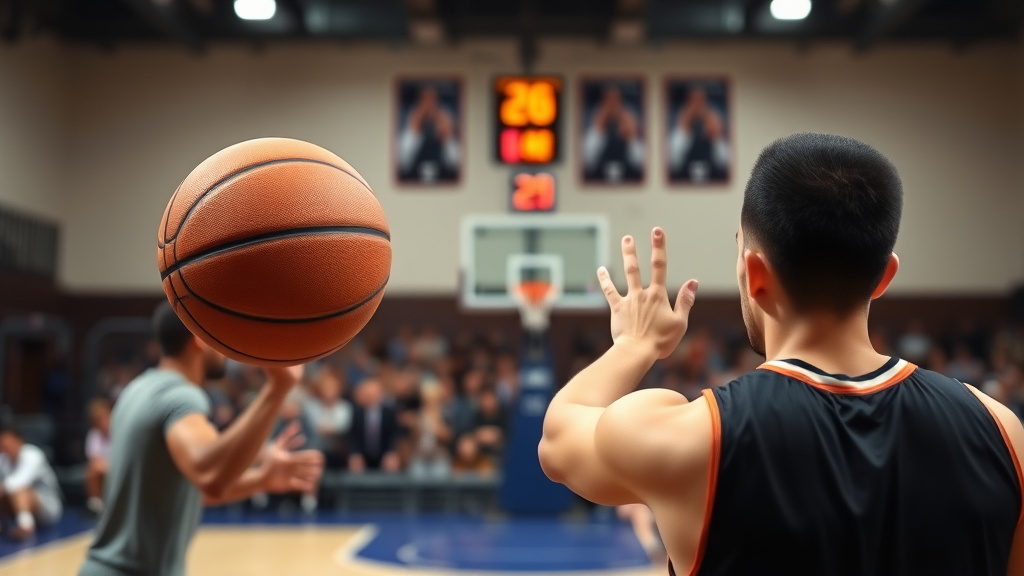
The three-point line has transformed basketball, significantly reshaping how teams build offensive systems and develop players. Once considered a novelty, the three-pointer is now central to modern strategy, compelling coaches to rethink spacing, ball movement, and player placement. This transformation transcends tactical considerations—it’s transformed how scouts judge ability and how aspiring players train. Discover how this single line has reshaped the sport’s competitive landscape, impacted how players are developed philosophies, and opened up possibilities for teams prepared to embrace the perimeter-oriented game.
The Growth of Three Point Shooting in the Game
The three-point line has undergone a substantial transformation since its introduction to professional basketball in 1979. Initially dismissed by traditionalists as a gimmick, the shot slowly earned acceptance as players developed the shooting ability to make it a reliable offensive weapon. First movers recognized its competitive advantage, and by the 1990s, the three-pointer became increasingly integral part of professional basketball. Today, it stands as one of basketball’s most important tactical innovations.
The evolution rapidly intensified in the 21st century, driven by technical improvements in training methods and data analysis. Teams started understanding that three-point shots offered superior efficiency in contrast with mid-range shots, catalyzing a significant change in how teams approach offense. Contemporary athletes now develop three-point shooting from youth levels, developing consistency and muscle memory that previous generations never attained. This shift in approach has reshaped what scouts prioritize and how teams are constructed.
Past Perspective and Regulatory Updates
The American Basketball Association introduced the three-point line in 1967, but the NBA didn’t adopt it until 1979 at a range of twenty-three feet nine inches. The league’s first resistance showed skepticism about whether the shot would disrupt traditional basketball fundamentals. However, innovative coaches and athletes began exploring long-range shooting, steadily revealing its strategic benefits. The rule’s implementation paved the way for revolutionary changes in how teams developed offensive strategy and player development.
Later rule modifications have significantly impacted three-point shooting’s prominence in contemporary basketball. The NBA shortened the three-point line in 1994 to twenty-two feet, making the shot more accessible and promoting increased usage. When the distance returned to its starting distance in 1997, teams had already incorporated the three-pointer as a fundamental component. International basketball’s acceptance of the three-point line further normalized the shot across the world, creating consistency across various competitive tiers and leagues around the world.
- NBA introduced three-point line in 1979 at twenty-three feet nine inches range
- ABA pioneered three-point attempts in 1967 before NBA adoption occurred
- Line shortened to twenty-two feet in 1994, improving shot opportunity considerably
- Range restored to original length in 1997 after a three-year trial
- FIBA implemented three-point line, standardizing the shot in global play
Effects on Offensive Strategies and Team Performance
The growth of three-point shooting has transformed offensive philosophy across all competitive levels. Teams now focus on spacing and ball movement, creating opportunities for perimeter-based scoring. Traditional post-centric offenses have adapted to accommodate various perimeter shooters, forcing defenders to move away from the paint. This shift requires versatile players able to hitting three-pointers while maintaining defensive accountability. Coaches more frequently design plays that optimize three-point opportunities, recognizing that productive outside shooting surpasses traditional two-point strategies in modern analytics.
Team dynamics have evolved substantially as roster construction prioritizes shooting skills over standard positional expectations. Guards and forwards must build consistent long-range accuracy, while centers more frequently launch three-pointers. This creates spacing advantages that open up penetration opportunities and facilitate offensive flow. Defensive schemes have adapted accordingly, with players compelled to play tighter defense on the perimeter. The result is faster-paced, more fluid basketball that values pace, adaptability, and shooting accuracy across all positions.
Spacing and Floor Concepts
Floor spacing represents the strategic positioning of shooters to establish scoring benefits and defensive mismatches. Modern offenses position several perimeter shooters at the same time, forcing defenders to make difficult choices between closeout defense and interior protection. This court spacing opens penetration paths for playmakers and creates efficient scoring chances. Teams utilizing superior spacing typically generate more assists and better shooting percentages. The concept directly contradicts conventional defensive approaches, requiring defenders traverse more ground while maintaining communication and positional responsibility.
Optimal floor spacing necessitates players with steady shooting technique and basketball intelligence. Coaches strategically organize lineups to optimize spacing benefits against individual matchups. This offensive system extends playing time to athletes formerly regarded as bench players, increasing their value in intense contests. Teams prioritizing spacing advancement achieve notable benefits during playoff basketball. The implementation of spacing strategies into coaching systems ensures players grasp their role assignments and offensive options within structured offensive systems.
- Spacing generates driving lanes for attacking ball handlers
- Multiple shooters require defensive adjustments and create mismatches
- Spacing reduces shot-blocking opportunities for post defenders
- Good floor spacing boosts assist numbers and ball movement efficiency
- Spacing concepts demand constant positioning adjustments during competition
Athlete Development and Training Methods
Modern basketball programs have significantly transformed their player development frameworks to emphasize perimeter scoring from youth levels through professional ranks. Young athletes now dedicate significantly more training time to outside shot technique, footwork, and real-game three-point opportunities. Coaches acknowledge that proficiency beyond the arc is no longer something teams can ignore—it’s essential for long-term player development. This shift has led to the emergence of dedicated shooting specialists and skill development specialists who focus exclusively on three-point reliability, transforming how talent scouts evaluate prospects and how teams allocate resources toward player improvement programs.
The incorporation of perimeter shooting into training systems has generated measurable improvements in shooting efficiency across all age groups. Training regimens now feature extensive shooting practice, contested shot scenarios, and high-pressure training settings that replicate game conditions. Players expand their abilities earlier, with players across all positions expected to shoot from distance. This integrated system has produced generations of highly capable spacing-focused performers who grasp offensive positioning and offensive dynamics, fundamentally improving the competitive level and depth of long-range proficiency in professional basketball.
Advanced Coaching Approaches and Performance Metrics
Advanced analytics have revolutionized how coaches design training programs and evaluate three-point shooting effectiveness. Teams leverage sophisticated tracking systems, shooting location analysis, and performance metrics to determine optimal shooting positions, shooting mechanics, and game situations. Coaches analyze defensive placement, defensive approach timing, and shooting window information to develop precision-focused practice scenarios. This data-driven approach enables personalized coaching, allowing performance coaches to pinpoint personal technique issues and adjust training protocols accordingly. Real-time feedback systems deliver instant feedback on execution, accelerating player improvement and maximizing training efficiency.
Coaching staffs now utilize specialized three-point shooting consultants who collaborate with strength and conditioning experts to enhance player growth comprehensively. Analytics guide choices about shot selection, spacing assignments, and player roles within offensive systems. Coaches use predictive modeling to anticipate shooting progress and spot high-potential recruits with strong shooting trajectories. Video analysis tools allow detailed biomechanical evaluation of shooting form across thousands of attempts. This blend of data, technology, and specialized coaching has created coaching environments where three-point development receives unprecedented attention and scientific rigor.
